
insights

Business insights and articles written by our team of world-class professionals

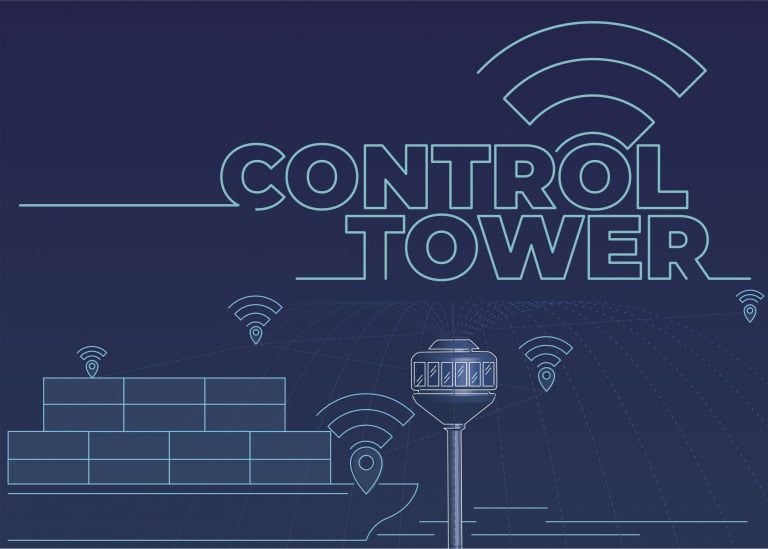
Ghana Integrated Logistics Management System and the Control Tower Concept

Supply chain control towers have been in existence for a while, significantly contributing to the transformation of both strategic and operational management of supply chains.  They form centralized information hubs for facilitating end to end visibility across value chains, with the intent to promote supply chains agility and provide capabilities to capture and process data in real time. Control Towers, where successfully implemented have significantly improved supply chain performance. By using real-time data, they facilitate both predictive and prescriptive analysis and ultimately enables the identification of weaknesses and strengths within supply chains, resulting in information sharing and collaboration.  They have provided information that guides value chains towards greater efficiency and improved processes and enable effective and efficient decision making. through the implementation of its Integrated Logistics Management System (GhiLMIS) is looking at ways to improve visibility and analytics to facilitate decision making across the enterprise.   It is believed that by enabling this capability, Ghana will be able to instantly aggregate data from its supply chain inventory, multiple warehousing centers and 3rd Party Logistic entities to guide improvements in the supply chain, leading to reduction in overall inventory operation costs, mitigation of any exceptions with an efficiency and gaining traction in achieving the Ministry of Health sustainable development goals like universal health care. Extending the functionality of the GhiLMIS to enable Control Tower capabilities, Ghana has built a platform that facilitates effective management of business information service, supply and demand planning, supports analytics, and monitoring of Key Performance Indicators (KPIs) across the value chain. This capability allows the Ministry of Health Ghana, to have end to end visibility across the value chain, facilitate information sharing across all key entities and systems, and provides a flexible interface for all supply chain partners suppliers, 3PLs, development partners, local manufactures and clients. It is believed that this platform will facilitate supply chain data integration leading to effective management of Ghana resources, enabling both systems and processes to function effectively and efficiently.  The solution is value driven, easy to use, designed to share, and sustainable.  In a short period of its implementation, it has facilitated easy access to supply chain data and provided real-time analytics, enabling the MoH to: Establish end to end near real time visibility of all supply chain data to all key stakeholders Reduce inventory operation costs, with the ability to predictively identify risks and exceptions Increase the collaborative capabilities between all entities, within in-country supply chain actors and global partners Proactively respond to and resolve all supply chain disruptions in near real time Leverage both predictive and prescriptive data to improve demand and supply planning, inventory management, operational costs, warehouse holding costs, optimize transportation, capacity management and overall decision-making The key elements that formed the foundation this successful implementation included: Data Standardization – to achieve interoperability across the Ghana eco-system, the GhiLMIS project leveraging Global Standards, pioneered the development and implementation of supply chain classifications to facilitate multiple system connections, thus enabling systems to be used collectively to enhance the quality and amount of data available to support supply chain operational processes and decision making, effective analytics and improving the ability to roll-up or drill down into commodity-related information. End to End Visibility – The GhiLMIS is built on ONE Network platform technology, an agnostic data integration solution, which embraces legacy technology platforms and multiple data sources making it possible to see the entire end to end value chain transactions in real-time.  Additionally, the ONE technology supports management of chain of custody of items, enhanced data integrity and visibility throughout the supply chain, from the central medical store down to patient-level consumption at service delivery points. Integration to In-Country and Global Solutions – The solution has been integrated with 3PLs to facilitate shipment tracking, capacity management and route optimization. Plans are underway to integrate GhiLMIS with in-country eHealth solutions within the Ghana eHealth ecosystem like DHIS2, HMIS and Global Solutions like GFPVAN.  This integration when completed with facilitate the sourcing of multiple sources of data, triangulation and analysis, supporting decision making. Analytics – The GhiLMIS supports easy access to data and has created abilities to Find, Trace, Extract, Distribute and Use data to drive improved health outcomes through both predictive and prescriptive analytics. The GhiLMIS uses policies and historical data to predict events and demand sensing abilities to support demand planning. Collaboration and Workflow Management – The GhiLMIS platform supports integration and workflow coordination at every stage of the supply chain, recognizing the interdependencies between how the activities at the last mile, impact upstream activities and vice versa.  These workflows facilitate seamless collaboration between different tiers making decision making informed and efficient. It is believed that this transformational approach to public health supply chain management, will significantly improve efficiencies, reduce costs, optimize operations and facilitate strategic decision-making, supporting countries achieve their public health goals.  Ghana is one of the pioneers of using data as a business asset and establishing a culture of data use in public health supply management critical decision making.  The Control Tower will play a major role in achieving this objective.

Read more >

The importance of systems interoperability in public health IT ecosystem

In the public health sector where majority of functions are done by siloed systems, interoperability is critical to systems implementation. Unfortunately, implementers either forget to include it in the system design and architecture or totally ignore the need. This issue has created multiple challenges ranging from constraining ministries of health to achieve their business objectives, to limiting the ability of using data from these systems to inform decision making. Occasionally, this issue has gone as as far as rendering the newly implemented systems obsolete, due to inability to perform their key functions because of absence of critical data from other systems. At S4D, we consider interoperability a critical success factor when developing system architecture in our implementations. We ensure that each system we introduce in the Country’s eHealth architecture, at a minimum meets the integration requirements, could communicate with other systems in the IT ecosystem, and its data structure is aligned to the country’s data requirements and configurable to accommodate Global Standards, thus enabling exchange of information in multiple formats across the enterprise. We view interoperability from three distinct perspectives, using the United States government, Healthcare Information and Management System Society (HIMSS) as our framework: Foundational Interoperability Where we consider that the systems, we implement have the capability to give data to another system, while also receiving data. Where we have implemented Logistics Management Information Systems (LMIS) we ensured that they can share and receive data from multiple Health Management Information Systems (HMIS) and other eHealth solutions both locally and globally within the ecosystem. For example, in Ghana, using the One Network architecture we managed to integrate the Ghana Integrated Logistics Management Information System (GhiLMIS) with District Health Information Systems (DHIS) enabling sharing of information between the supply chain and service solutions. Structural Interoperability Where we ensure that data transferred between systems is sent and received in formats that can be interpreted and understood by the two systems. We ensure that data is sent and received in a meaningful and shareable format and that information and meanings will not change even though the data may change hands. For example, in Ghana, we integrated the GhiLMIS with the Imperial Management Science (IMS) SAP software solution, using this approach. The integration ensured that irrespective of different solutions managing the Ghana public health supply chain transactions, the data that is exchanged stays meaningful and shareable to the end-users. Semantic Interoperability Where we have developed master data that supports the entire supply chain and structured it in formats that allow any system in the ecosystem to correctly receive and understand new data. The standardized coding has enabled us connect systems not only within in-country supply chain ecosystem but scaled up to include global solutions. With the master data that supports both our unique data structure and Global Standards like the GS1, we successfully integrated GhiLMIS with the GFPVAN. This is one of the unique occasions where an in-country supply chain solution has been successfully integrated with a Global Control Tower platform. Our experience has shown that when interoperability is considered as a critical part of system implementation, project objectives are fully realized, and foundations are built for system agility within the IT ecosystem and ministries ability to sustain them. Interoperability will ensure that data is shared across the enterprise, improve service provision and patient care, while improving operational efficiencies and cutting down overall costs, enabling sustainable and resilient health systems.

Read more >

Introducing S4D Learn Hub!!

In a world where disruptions like pandemics have created challenges in delivering training, building capacity and transfer knowledge in traditional face to face settings, electronic based learning has proved to be a big mitigation to these challenges and associated risks. One sector that demands constant learning and employee training is the public health sector. With new regulations, and technological advancements introduced every day, healthcare professionals must be equipped with the best tools to stay on top of these changes. The consequences, otherwise, could be incredibly damaging.   In countries where new systems that require end-user training have been implemented; where new disease control processes need to be disseminated to public health care officials; where there’s constant need for public health awareness and training; and where agile knowledge management platforms need to be easily updated and referenced, eLearning solutions provide a convenient mechanism to ensure content delivery and support both knowledge management and capacity building. At S4D we built a learning hub that addresses all these needs. A hub that facilitates new system end-user training and a knowledge management repository that provides flexible learning options, with capabilities for end-users to access self-paced personalized learning or attend a virtual classroom. Additionally, the platform provides capabilities for easy compliance training reducing the burden on individual learners as well as the admin.   It creates the ability to make users aware of new compliance training and its urgency with the bonus of management being able to track workers who are compliant, and issue reminders to those who are not. The S4D Learn Hub is a significant partner in establishing dynamic and resilient healthcare systems, as well as introducing operational efficiencies and reducing overall training expenditure. The S4D Learn Hub platform is customary designed and implemented to suit the needs of specific users, provides capability for organizational knowledge management, and provides insightful reporting data to track and improve organizational capacity development.  If you wish to know more about S4D eLearn Hub solutions, feel free to contact Ms Linda Azumah @lazumah@s4dconsulting.net or call +12409386300

Read more >

ready to take your business to the next level?

Get in touch today and receive a complimentary consultation.

Scroll to Top